
三体
Inside Asia’s oldest private library, guarding ancient scrolls in the age of AI_我的网站

A | 自2025年11月10日起,HPV疫苗纳入国家免疫规划。国家疾控局等部门明确,2011年11月10日以后出生、年满13周岁的女孩,可免费接种2剂次双价HPV疫苗。

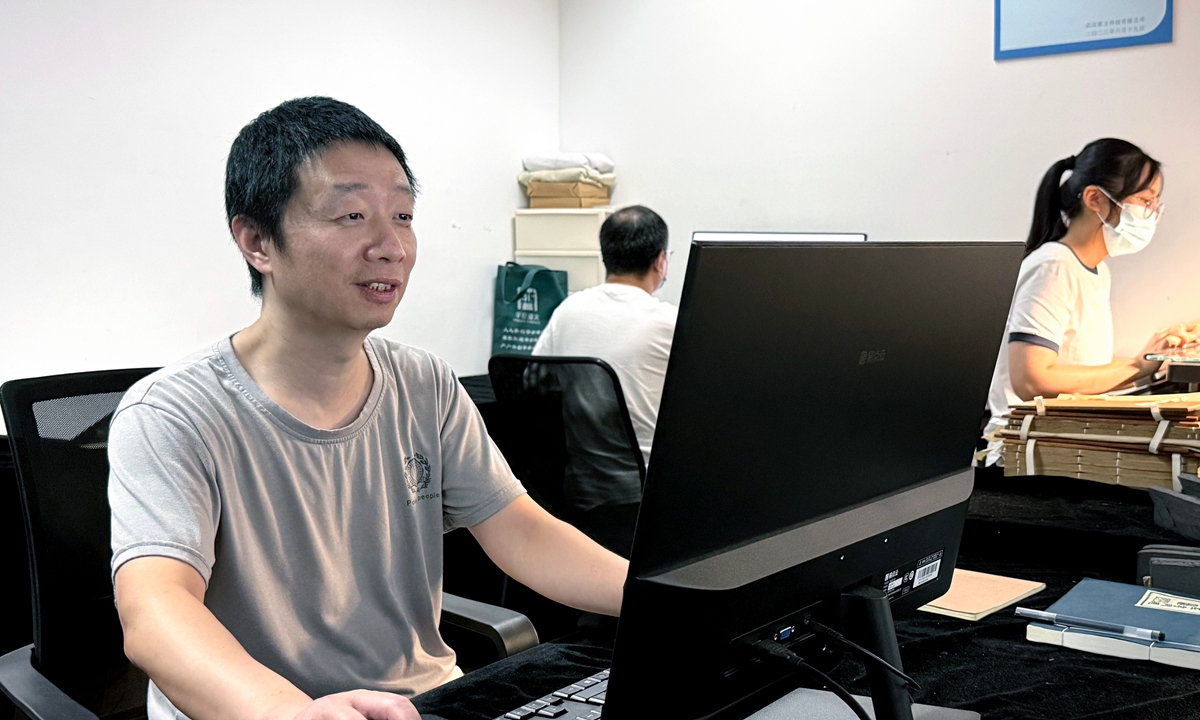
Huang Gang is in his fifties. Every day, he sits before a computer screen at Tianyige Museum (Tianyige), flipping through ancient books - digitally.
As director of the information technology department at Tianyige Museum in Ningbo, East China's Zhejiang Province, home to Asia's oldest surviving private library and one of the world's three oldest remaining family-run libraries, his job title may seem far removed from old books. Yet his work centers on them: converting brittle, thread-bound antique volumes into searchable, zoomable digital files accessible on screen.
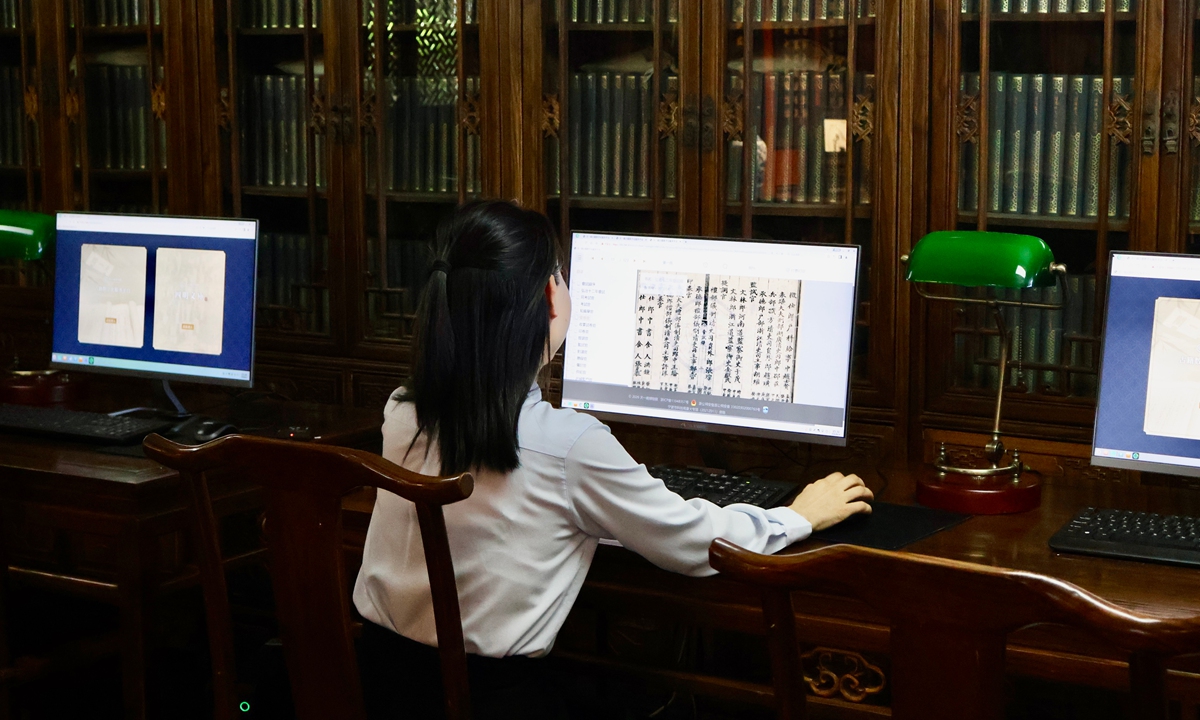
For years, Tianyige has carried out digitization in batches guided by its mission: rescue-oriented preservation, scholarly organization and public-oriented outreach. Its teams have scanned more than 3.4 million pages of ancient texts. The institution rolled out its Ancient‑Book Digital Service Platform back in 2009. By 2025, the platform had drawn over 4.6 million total visits.
To outsiders, this might look like a headlong rush into digitization. For Huang and his colleagues, it is delicate work balanced between fast‑evolving artificial intelligence models and the reverence owed to fragile paper relics. "Technology is a tool, ancient books are artifacts, and reading is the ultimate purpose," Huang told the Global Times.
Beyond tech boundaries
Deep in the storage vaults of Tianyige, tens of thousands of ancient volumes rest in silence. Some pages are curled and fragile; others bear faded script -the accumulated marks of centuries. Vulnerable to aging, wear and external damage, these precious paper relics can hardly sustain long-term repeated manual consultation, making digital preservation an indispensable way to inherit ancient book resources.
Huang's daily work involves leading his team in the digitization of the library's entire collection of ancient books, paintings and cultural relics, bringing rare treasures out of the shadows and into public view.
AI now serves as a core auxiliary tool for ancient-book digitization and research. Huang's group initially built character-recognition frameworks based on optical-character-recognition technology. By cross-checking outputs across different models, ancient Chinese characters, damaged script and blurry handwriting.
According to Zhejiang Daily, by August 2025, the Tianyige's digital platform had added over 3,700 new digitized book sets, lifting its total digital holdings past 20,000 volumes.
Digitization is never a purely technical exercise; in-depth scholarly expertise in ancient texts remains indispensable. Huang frequently collaborates with Zhao Xuteng, a museum librarian specializing in classical literature. Zhao is responsible for selecting which volumes to digitize, evaluating editions, studying content, and identifying works of significant academic or public value. While one team focuses on the technical execution, another digs deep into the textual substance, ensuring that cold digital capture remains faithful to the historical and bibliographic logic of the originals.
Staying true to reading
When he is not writing code, Huang keeps asking one fundamental question: What should technology actually do for people? "All technology ultimately serves the act of reading itself," he said. "It can never replace that."
With the rapid rise of large language models, demand for high-quality text corpora has surged. Overseas, some AI companies have reportedly purchased millions of printed books in bulk, scanned them and then shredded the originals.
"Machines can efficiently compile documents, retrieve sources and generate explanatory notes. Real engagement with ancient texts, however, is far more than mechanical assembly of characters," Huang noted.
Both Huang and Zhao stressed that human beings sit at the heart of cultural inheritance. People absorb wisdom from old texts, draw on personal experience and scholarship to reflect, and produce new knowledge - an intellectual process no AI can fully replicate.
The Global Times learned that every digitization workflow at Tianyige follows strict closed-loop protocols: collection checkout logging, noncontact scanning, AI-powered quality checks, precise image stitching and compliant online publication. The full procedure minimizes physical wear on original artifacts.
"A book is, first and foremost, a cultural relic that carries a thousand-year legacy," Huang said. "Only secondarily is it a text to be read." That principle, he added, is shared by all guardians at Tianyige.
"Media change, technologies evolve, but the essence of reading has never changed," he stressed.
Today, drawing on its comprehensive digital collections, Tianyige hosts monthly exhibitions of rare texts and organizes family reading events where parents and children explore the classics together. For Huang and his colleagues, the most gratifying reward is watching more and more ordinary people develop a love for ancient reading and a deeper appreciation for the traditional Chinese culture.
In an era swept by artificial intelligence, Tianyige's guardians tend to fragile paper relics while leveraging modern technology, preserving the genuine power of reading. More than 450 years of scholarly heritage flows onward, passing between human fingertips and glowing digital screens.
。 临近开学,很多家长都收到了地方疾控部门或学校发出的接种HPV疫苗的提示消息。

B | 一些家长对此也有顾虑,HPV疫苗必须接种吗?为何要将疫苗接种年龄划定为年满13周岁?近期,国家疾控局持续对相关问题进行答疑。 去年,我国将人乳头瘤病毒疫苗(即HPV疫苗)纳入国家免疫规划,自此,预防宫颈癌从“个人选择”走向“全民防护”。 接种HPV疫苗有何作用?简单来说,这是有科学证据证明的阻断宫颈癌发病最有效、最经济的一级防护措施。中国疾病预防控制中心研究员王富珍介绍,绝大多数(99%)的宫颈癌发病都与高危型HPV持续感染密切相关。对适龄人群接种HPV疫苗可有效降低宫颈癌患病风险。 根据国家癌症中心数据,我国宫颈癌新发和死亡病例仍处于较高水平。以2022年为例,当年我国宫颈癌新发病例超过15万例,死亡病例达到5.6万例,相当于近10分钟就有一名女性因宫颈癌离世。同时,近20年来我国宫颈癌的发病率呈上升且年轻化的趋势,部分病例甚至出现在20多岁未育女性中。 有家长提出顾虑,13岁年龄太小,孩子大一点再打疫苗也不迟。对此,专家表示,确定13周岁为接种目标年龄,是因为该年龄段免疫应答效果较好。当前我国女性HPV感染率按年龄呈“双峰”分布,其中第一个高峰在17-24岁。中国疾病预防控制中心免疫规划中心副主任安志杰表示,在首次暴露前接种疫苗能形成最佳的保护效果。 安志杰:从感染风险来看,HPV主要通过性行为感染,因此在感染几率增大之前进行HPV疫苗接种,可以获得更好的保护效果,最大限度发挥疫苗预防HPV感染的作用。从免疫效果来看,相关研究表明,9~14岁女孩接种HPV疫苗产生的抗体水平是15岁以上人群的两倍以上。

C | 因此在13周岁接种HPV疫苗,可以获得更高的抗体水平和更持久的保护效果。 专家建议,在适龄阶段早接种可形成长效免疫记忆,防护效力至少维持10年以上,宫颈癌发展周期长,提前接种才能从源头阻断感染。 近期,一些社交平台上出现“金秋入学将查验学生HPV疫苗接种情况,未接种不能入学”的帖子。对此,国家疾控局表示,HPV疫苗接种情况已纳入部分地区入学查验范围,但是否完成接种不会影响孩子入学。 国家疾控局表示,按照《儿童入托、入学预防接种证查验办法》开展预防接种证查验工作并非新设制度,而是依据《中华人民共和国传染病防治法》《中华人民共和国疫苗管理法》长期执行的常规程序,旨在核实接种情况、提醒补种。HPV疫苗作为新纳入国家免疫规划的品种,在入学阶段对预防接种证进行查验是正常调整。但完成接种并非入学前置条件,未接种或未完成接种的学生不影响正常入学。

D | 王富珍介绍,家长可按照学校查验给出的健康提示及时给孩子进行接种。 国家疾控局提示,各地接种单位常态化开展免疫规划疫苗查漏补种工作。符合年龄要求的适龄女孩,如因故未能在规定时间内接种免费HPV疫苗,可在18周岁前到辖区接种点申请补种。
E | 目前,国内市场上HPV疫苗有双价、四价、九价等多种价次。

F | 有家长担忧,纳入国家免疫规划的双价HPV疫苗不如其他价次疫苗效果好;已经完成四价或九价HPV疫苗全程接种,还需要再接种免费双价疫苗吗?疫苗接种过程中需要关注哪些问题? 目前,我国已上市的双价、四价、九价HPV疫苗的核心区别在于预防的病毒型号数量和覆盖的疾病范围不同。

G | “价”代表疫苗能预防的HPV病毒亚型种类。

H | 选择接种四价或九价HPV疫苗的家长多看中其可防护更多型别的HPV病毒。 专家表示,双价HPV疫苗主要针对的HPV16和18型别病毒,是我国宫颈癌发病的元凶,可有效预防70%以上的宫颈癌发病。

I | 四价、九价HPV疫苗除了预防宫颈癌之外,也能够预防尖锐湿疣等疾病,家长可以综合考虑后进行选择。自费接种四价、九价HPV疫苗后,也视同完成国家免疫规划疫苗的接种。 中国疾病预防控制中心免疫规划首席专家王华庆介绍,双价HPV疫苗实施2剂次免疫程序,接种间隔是6个月。 王华庆:双价HPV疫苗完成首剂接种后间隔半年接种第二剂次,间隔期最好不要超过一年。许多临床研究证据证明HPV疫苗和其他疫苗,如甲肝疫苗、乙肝疫苗、百白破疫苗、脊髓灰质炎疫苗、流脑疫苗等同时接种,没有发现有效性降低,安全性风险增加的情景。因此国际共识是HPV疫苗可以与其他疫苗同时接种,但需要注意的是同时接种要选择不同的部位,如左上臂接种HPV疫苗,右上臂接种其他类疫苗。

J | 专家同时提醒,HPV疫苗对已经发生的病毒感染无清除作用;北京协和医院妇产科学系主任医师朱兰表示,在接种疫苗后,仍建议女性定期进行宫颈癌筛查。 朱兰:HPV疫苗属于预防性疫苗,不能清除已存在的HPV感染,也不能阻止已有病变的进展,所以仍需要定期筛查。如果确定为宫颈癌前病变的患者,可以通过及早的临床治疗,健康管理和康复支持等措施,减少宫颈癌导致死亡的可能,提高患者的生存质量。
Current article:http://63gu.linxiuhuaishuangniuzhenrua.bond/5vdi0/b5wp.html
Published on:22:19:39
我的网站最近更新
- 中超积分榜:三镇22分领跑泰山第2 广州城0分垫底
- 张华林同志逝世
- 内塔尼亚胡宣称美伊“不可能”达成外交协议
- 假名校教师设局 3巧合得逞骗2万新元
- 邻居见蛆报警揭 七旬汉家中成腐尸
- 浙江省发出今年第2号指挥长令
- 美联储柯林斯:支持维持利率不变,但需更多通胀回落证据
- 华泰证券港股策略:金融和AH溢价仍有改善空间
- 万物云宋澜涛谈城市更新:既要做好硬件改造 也要建立运营和维护机制
- 索尼 Xperia 10 VIII 手机发布:屏幕亮度提升 50%、搭骁龙 6 Gen 3 处理器
- 中西医多学科整合式诊疗体系治疗帕金森病 提高患者生存质量
- 永久号:不中签,有“毛”用?
- Return of delicate aquatic plant signals Chinese lake's revival
- 玄戒三款新自研芯片上央视!小米朱丹:三芯齐发解决强不强、全不全
- 辽宁省市县两级国土空间总体规划全部获批实施
- 京津冀联合发文:养老机构等级评定和老年人能力评估结果互认
- 每周日晚对外开放 钱塘江上首个宠物友好航班开航
- 特斯拉营收销量创新高,马斯克却只想说机器人军团
- 《GTA6》全新泄露来袭!玩家:怎么全是老人和胖子
- 一个足球赛事,“燃”动城市活力
- 용인 어린이집서 2살 원아 창밖 아래 추락해 부상
- 英伟达AI服务器将涨价15%!1GW数据中心成本激增50亿美元
- 对话拜仁市场营销董事:欧洲豪门如何经营中国足球市场
- 特发信息:2026年半年度净利润6206.67万元,同比增长1007.52%
我的网站热门资讯
- 【利润】8月26日各地区每头生猪利润汇总
- 「そして、お知らせです」…「サン!シャイン」佐々木恭子アナ、エンディングで発表「キャリアの作り方…どうやって自分の中で生き方を見つけて…」
- 拼多多做爆款链接的三种方式
- 주중 日대사 "중일 관계 11월 中서 열리는 APEC 계기 개선? 낙관못해"
- 双色球2026081期开机号分析(附历史)
- Woolworths再曝食品卫生问题,顾客称很恶心:“太脏了!”
- 登泰山想省心省力 泰山顶宾馆怎么选
- iQOO 16首批搭载高通第六代骁龙8超级至尊版:剑指安卓最强性能
- 国家防总、应急管理部针对京津冀蒙青启动防汛四级应急响应
- 《GTA6》最新实机泄露!枪支怼人首曝 NPC反应亮眼
- 英国医院试验新的皮肤癌疗法 可在数秒内无痛杀死癌细胞
- CPC to unswervingly advance cause of national reunification: Xi Jinping
- 产地丰产冷链提速 进口货源持续扩容 福州榴莲价格持续下探
- 国通星驿乱扣费不确定性欺瞒消费者太过分
- AI推翻87年数学难题?困扰数学界的雅可比猜想,可能被三行公式证伪了
- 滑滑梯、跳水台,堪比“水上乐园”!来打卡企鹅们的新家~
- 洛杉矶大火恐成美最具破坏性自然灾害,新一轮强风或致火势扩大
- 富贵险中求,风控怎么做?
- OPPO Find X10系列阵容大调整:Pro版缺席 新增Pro Max
- 四维图新 2026 年上半年归母亏损 4.89 亿元,同比下降 57.41%
- PM SVANidhi योजना 2030 तक बढ़ी, बदलेगी लाखों रेहड़ी-पटरी वालों की किस्मत; जानें पीएम मोदी ने किए क्या-क्या एलान?
- 포천시, 지방세 전자고지·자동이체 신청 독려…“종이 고지서 대신 스마트폰으로”
- 绿茵逐梦展风采 第二届“通隆杯”晋安青少年足球邀请赛落幕
- 【收评】豆二日内上涨1.83%机构称蛋白粕远月价格有支撑,美豆优良率下降及进口成本抬升